Champagne Billecart-Salmon was founded in 1818 following the marriage of Nicolas-François Billecart and Elisabeth Salmon. Located in Mareuil-sur-Aÿ near Épernay, the House remains family-owned, today led by seventh-generation Mathieu Roland-Billecart.
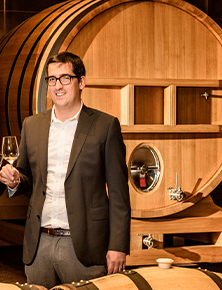
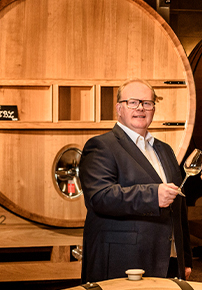
Chef de Cave François Domi retired in 2016 after 30 years, succeeded by Florent Nys, who joined in 2005. Vineyard management is overseen by Denis Blée. Together with sixth-generation François Roland-Billecart and Antoine Roland-Billecart, they form part of the seven-member tasting committee guiding the House style.
In the 1950s, Jean Roland-Billecart pioneered low-temperature fermentation in stainless steel - now a hallmark preserving fruit freshness. Today, wines are fermented in stainless steel, temperature-controlled large oak casks, small oak barrels, or a combination, depending on the cuvée.
By 2020, production drew on 300 hectares: 100 hectares estate-owned and certified organic in 2025; 100 hectares under contract (herbicides and chemical fertilisers eliminated in 2019); and 100 hectares from grower partners. The vineyards span 40 crus, mostly within 20 km of the winery. In 2017, the House achieved High Environmental Value certification.
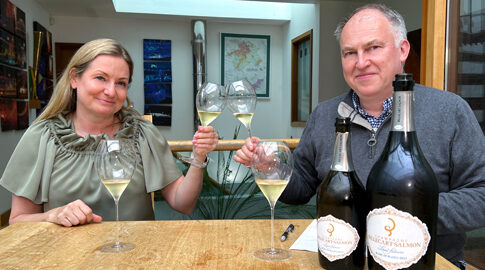
Billecart-Salmon Rendez-vous No.3 is the latest addition to the Billecart-Salmon range, a 100% Meunier blend, rarely seen in Champagne. Created from the historic terroirs of Leuvrigny, Festigny and Venteuil in the Marne Valley, where the Pinot Meunier varietal gives wine from this region its distinctive identity. Leuvrigny and Festigny vineyards are on the left bank of the Marne Valley, exposed to the east and south, on limestone subsoil. Venteuil vineyards are on the right bank of the Marne Valley, exposed to the south, on loamy subsoil. No.3 is based on 2015 and has 30% reserve wines from 2013.
Technical Information:
Vineyards: Villages of Leuvrigny, Damery and Venteuil in the Marne Valley
Grape Varieties: 100% Meunier
Lees Ageing: 5.5 years
Base Wine: 2015
Reserve wines: 30% From 2013
Disgorged: November 2021
Dosage: 2 g/l
Drink: Now to 2030
Tasting Note: Real breadth of interesting autolysis on the nose. The Pinot Meunier perhaps shows itself in a slight lack of deep-flavoured follow-through but it really is lovely on the nose. Bone dry but not austere. An interesting bottle of very well-made champagne with sufficient depth. - Tasted by Jancis Robinson MW
Champagne Billecart-Salmon was founded with the marriage of Nicolas-François Billecart and Elisabeth Salmon in 1818. Situated in the village of Mareuil-sur-Aÿ, near Epernay. Today the family own 55% of the Maison with partners The Frey Group owning the remaining share. Their partners are owners of Château La Lagune, Paul Jaboulet Aîné in Hermitage and Château Corton-C in Aloxe-Corton. The business farms 100 hectares of their own vineyards and manage another 200 hectares from 40 crus mostly within 20 kms of the winery. Still a family-run organisation, seventh generation Mathieu Roland-Billecart oversees business. In 2016 Chef de Cave François Domi retired after 30 years with Billecart and handed over to his deputy Florent Nys who started with the business in 2005. The vineyards are overseen by Denis Blée and all of the team are members of the eight strong "tasting committee" along with 6th generation François Roland-Billecart and Antoine Roland-Billecart and fifth generation Jean Roland-Billecart.
The House style is intensely bright and fruity with an increasingly oxidative tone brought about by the recent re-introduction of oak. The Billecart-Salmon portfolio is vast but they are perhaps best known for their prestige cuvées, Cuvée Nicolas-François and Cuvée Elisabeth Salmon Rosé. In 1999, Cuvée Nicolas-François 1959 was awarded 'Champagne of the Millennium' by a committee of experts at a blind tasting session involving 150 vintages from the most illustrious champagne producers. The jewel of the estate however, is the single-vineyard champagne Clos Saint Hilare: a monstrously powerful cuvée originating from a single Pinot Noir plot sheltered by a wall of stone.
Chef de Cave History at Champagne Billecart-Salmon:
Florent Nys - 2016 to present -
Has been working as an apprentice under the watchful eye of François since 2005
François Domi - 1985 & retired in 2016
He continued the double cold settling of his predecessor and was an early convert to technological corks.
James Coffinet - 1976 to 1985 -
He introduced double débourbage, longer periods of cold settling the must, twice for between 24-48 hours at 6 Celsius followed by a cooler fermentation. These were practices borrowed from the brewing industry. Coffinet was considered one of the best winemakers of his generation. The 1982 vintage was considered his masterpiece while at BS. Look out for a rare chance to buy a well stored bottle of Nicolas Francois 1982