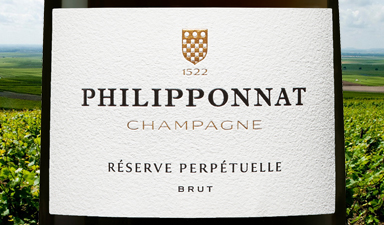
The Philipponnat family, originally from Switzerland, settled in Champagne in the middle of the 16th century. Their history as vine-growers is believed to have begun in 1522, but the house as we know it today wasn't officially founded until 1910. Pierre Philipponnat established his house in a difficult era, with the Champagne Riots, a World War, and the Great Depression incoming. But the house's fortunes changed in 1935, when Pierre acquired what would eventually become one of Champagne's greatest treasures and one of the world's greatest wines - a little-known, steep-sloping, south-facing vineyard called Clos des Goisses, which is still the jewel in the Philipponnat crown today.
In 1997, the house was purchased by Bruno Paillard, becoming part of what is now the Lanson-BCC Group. Although Philipponnat has lost family ownership, it is now back under family management, after Paillard convinced sixteenth generation Charles Philipponnat to come and run the business his grandfather had founded 90 years earlier. Alongside cellar master Thierry Garnier, who has been with Philipponnat since 1993, Charles has been busy establishing a more Pinot-dominant house style, much-loved by connoisseurs. Philipponnat are also celebrated in the trade for printing disgorgement dates on their labels, which they have been doing since 1996. Today, Philipponnat enjoys growing acclaim from both wine critics and the world of haute cuisine.
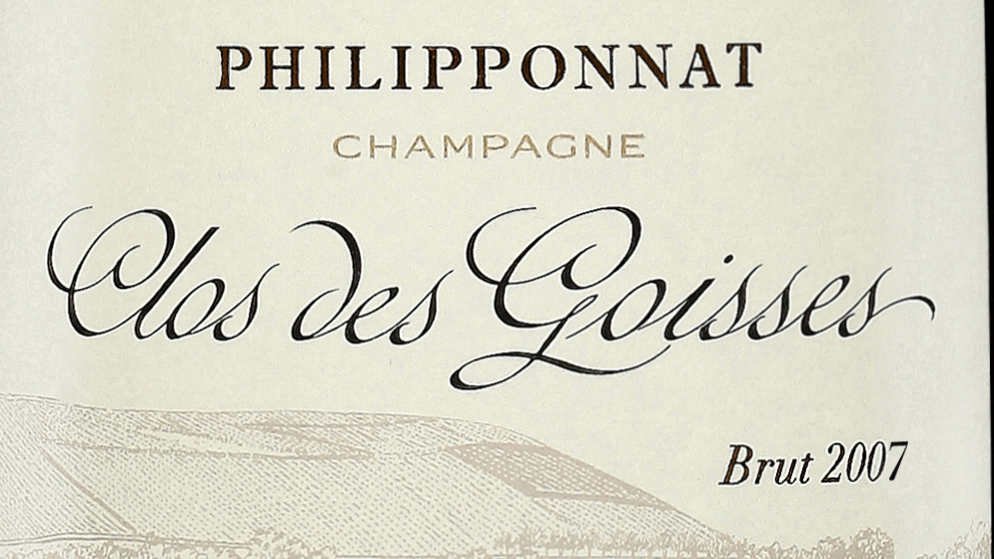
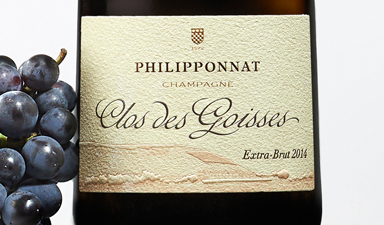
The jewel in the Champagne Philipponnat crown is a tiny 5.5-hecatre single walled vineyard called
Clos des Goisses. Acquired in 1935, Pierre Philipponnat was quick to realise the potential of this unique plot and immediately started producing a single vineyard blend. Originally named Vin des Goisses, it was changed to Clos de Goisses in 1959 and thus the category of Clos champagnes (produced from grapes within walled vineyards) was born. Clos des Goisses is truly iconic: situated by the Marne canal, it is a steep-sloping, south-facing vineyard with an inclination of 35-45 degrees that can only be fully appreciated by visiting. Gois, means a very steep slope. Due to its size, production is limited to a maximum of 55,000 bottles each year.
Weather: The 2009 harvest began with a particularly cold winter but mild spring temperatures helped avoid any frost damage. Some stormy spells boosted the vegetation in late spring and June and July were altogether variable with hot spells and rainy patches. The glorious August weather was perfect for the grapes growth, hot and dry days followed by cool nights led to rapid maturation. Harvest began on September 8th and ended on the 21st.
Technical Information:
Vineyards: 100% 1er Cru, Mareuil-sur-Ay -
Single vineyard: Clos des Goisses
Grape Varieties: 61% Pinot Noir, 39% Chardonnay
Ageing: 8 years on the lees
Disgorged: March 2018
Dosage: 4.5 g/l
Drink: Now to 2029
Tasting Note: Elegant and light gold colour with a fine stream of bubbles. The palate has an abundance of fruits and citrus, with delicate hints of brioche and vanilla. A creamy mousse on the midpalate combines with honey and gentle spices. A stunning example from 2008, from a magnificent single vineyard.
Almost 500 years ago, the ancestor of Apvril Philipponnat - a soldier of King François - was awarded land in the village of Aÿ as a reward for his bravery during the Battle of Marignan. During the 16th century the Philipponnat family were winegrowers and merchants, famously supplying the court of Louis XIV. However, it took a few centuries for Champagne Philipponnat to be founded - finally being established by Pierre Philipponnat in 1910.
The House now owns seventeen hectares of vines, all situated in the Grand and Premier Cru vineyards of Avenay, Aÿ and Mareuil-sur-Aÿ. Traditional methods of harvest such as working the soil through horse ploughing and hoeing by hand are still observed at Champagne Philipponnat today. Their techniques of partial fermentation in oak and partial malolactic fermentation result in a complex and long-lived style of champagne. They were also one of the first producers to print disgorgement dates on the label of their bottles, commencing this practice in the mid-1990s.