Average rating 4.9/5 stars across all Google and external reviews
We can ship to EU & other Worldwide Countries. Delivery prices calculate in the checkout when you add delivery country & postcode.
Champagnes or wines shipped outside of the UK are VAT exempt, shipping prices include both shipping price and your Country import taxes & duties, DDP, Delivered Duty Paid.
The checkout will indicate shipping days once destination address is completed.
Advanced checkout allows you to choose multi person deliveries at one address or at different addresses,
we can upload large multi orders from this spreadsheet template
Order 6+ bottles or £250+ and standard delivery is free to one delivery address. Cases can be mixed.
Bought directly from Champagne Suenen UK agent, the bottles are stored in bond at London City Bond Eton Park, in ideal conditions at a constant 13°C. For same-day deliveries, small quantities are kept in our office cellar, where the temperature is maintained between 11–13°C. We source all our bottles directly from the Maison or their official UK office, eliminating the risk of poor storage. This is crucial, as champagne quality is highly sensitive to heat: temperatures above 18°C accelerate maturity significantly, which compromises quality.
The Suenen family has been growing grapes in the Cramant area since the late 19th century, with winemaking beginning in the early 20th century. Aurélien's great-grandfather, Marcel, and his wife Simone, were the first to bottle and sell their own Blanc de Blancs under the Suenen name. Aurélien Suenen returned to the family estate after a career in professional basketball, taking over from his father in 2009. He has revitalized the domaine by focusing on the Côte des Blancs, particularly Cramant, Chouilly, and Oiry, and by adopting sustainable, low-intervention winemaking practices. Suenen emphasizes the unique characteristics of the terroir, with a particular focus on Chardonnay grown in the chalky soils of the Côte des Blancs. While embracing traditional methods, Aurélien also incorporates modern techniques, including the use of concrete eggs and demi-muids, 800 litre oak, for aging, and a small percentage of neutral oak barrels. He also ferments with indigenous yeasts and uses minimal sulphites and low dosage. Suenen achieved organic certification in 2019, reflecting his commitment to sustainable and environmentally friendly viticulture.
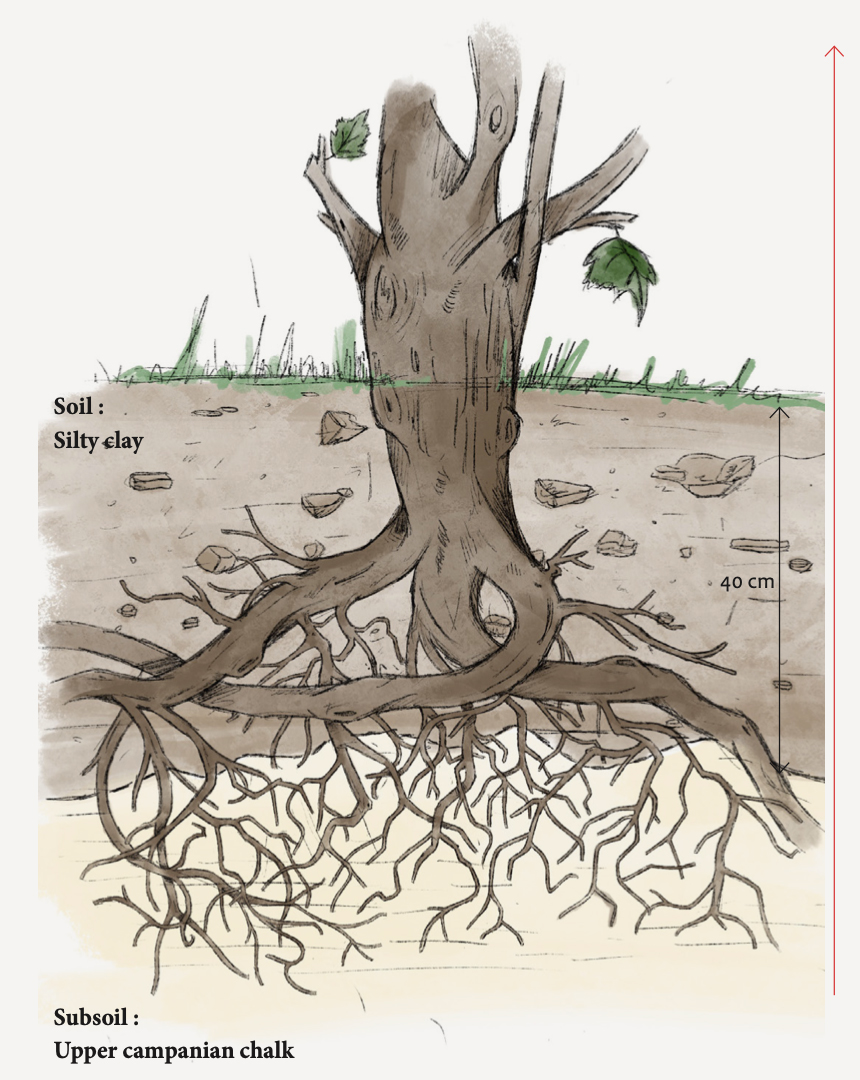
Suenen's vines, in the lieu-dit La Cocluette, were planted in 1925 on thin silty-clay soils over a Campanian limestone bedrock. Located towards the top of a gentle hill with 80% of the vines facing north and the other 20% facing south.
Weather: The year 2018 seems to symbolize a significant climatic tipping point. After a rainy winter, the conditions at the start of the season were ideal for vines. The period of heat and drought was exceptionally long. Fortunately, as our Côte des Blanc plots are planted on exposed chalk, our vineyards did not suffer from excessive water stress. Note also that vines can withstand severe water stress. After a hot, dry season, there was no significant impact from mildew, powdery mildew or botrytis anywhere in sight. The harvest of this plot took place on September 1st. An extremely early vintage. A very healthy and generous harvest.
Technical Information:
Vineyards: 100% Grand Cru | Oiry - La Cocluette Vineyard
Grape Varieties: 100% Chardonnay
Lees Ageing: 5 years
Bottling date: July 19th 2024
Disgorged: June 2024
Dosage: 4 g/l
Vinification: Concrete eggs (55%) and Demi-muids (45%)
Production: 1796 bottles
Drink: Now to 2036
Tasting Note:Offering aromas of lemon zest, oyster shell and dried white flowers, it’s medium-bodied, structured around mouthwatering acidity and vivid chalkiness, concluding with a pure, intensely mineral finish. - Tasted by Kristaps Karklins
The Suenen family has been growing grapes in the Cramant area since the late 19th century, with winemaking beginning in the early 20th century. Aurélien's great-grandfather, Marcel, and his wife Simone, were the first to bottle and sell their own Blanc de Blancs under the Suenen name. Aurélien Suenen returned to the family estate after a career in professional basketball, taking over from his father in 2009. He has revitalized the domaine by focusing on the Côte des Blancs, particularly Cramant, Chouilly, and Oiry, and by adopting sustainable, low-intervention winemaking practices. Suenen emphasizes the unique characteristics of the terroir, with a particular focus on Chardonnay grown in the chalky soils of the Côte des Blancs. While embracing traditional methods, Aurélien also incorporates modern techniques, including the use of concrete eggs and demi-muids for aging, and a small percentage of neutral oak barrels. He also ferments with indigenous yeasts and uses minimal sulfur and low dosage. Suenen achieved organic certification in 2019, reflecting his commitment to sustainable and environmentally friendly viticulture.
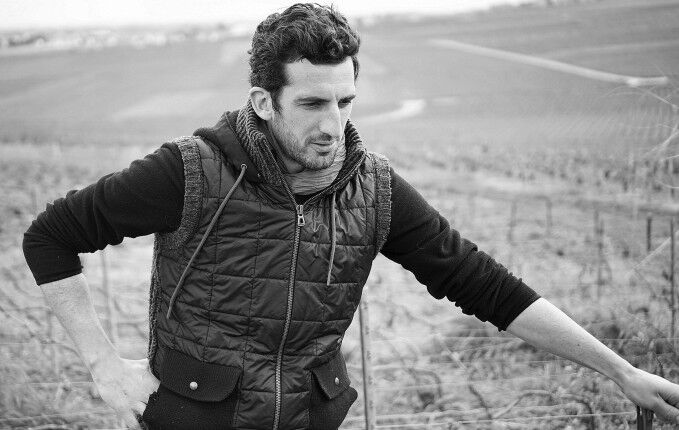
Aurélien Suenen - 2009 to present - In 2009, at age 23, Aurélien Suenen assumed control of the estate after his father's health crisis. He had earlier abandoned ambitions in professional basketball to support the business after a serious accident in 2003. Holding a degree in oenology from Avize, Aurélien was already immersed in vineyard and cellar work before taking full leadership. From the start, Aurélien shifted toward organic viticulture, eliminating herbicides and implementing cover crops, composts, and herbal infusions to restore soil biodiversity. The estate was certified organic in 2019. He reduced estate size, focusing almost exclusively on 3.2–5 hectares in the Grand Cru villages of Cramant, Chouilly, and Oiry, while selling or leasing peripheral plots in Montigny‑sur‑Vesle, retaining only a small parcel of old‑vine Pinot Meunier known as La Grande Vigne. Average yields were halved compared to previous generations to prioritize fruit quality and terroir expression. Aurélien Suenen now serves as the modern cellar master and visionary winemaker.
Daniel Suenen - 1950s - 2009 - Expanded estate, first vintage wines, growth to ~20K bottles/year
Marcel & Simone Suenen - Late 1800s – 1924 - First bottled Suenen‑Stourbe cuvée
Expert Reviews
96+/100
Kristaps Karklins
“The most tightly wound of the four lieux-dits is the 2018 Extra-Brut Blanc de Blancs Grand Cru Oiry La Cocluette. Sourced from a parcel planted in 1925 and exposed 70% north (with the remaining 30% facing south), it’s a site where Suenen has recently raised the trellising to 1.7 meters, rolling up the canopies without trimming the apex to provide shade for grapes and soil and benefit from higher maturity of fruit. Vinified in seven-hectoliter concrete egg and used six-hectoliter barrel from Stockinger, it was disgorged in July 2024 with four grams per liter dosage.
This year, it’s a great success, combining the tension informed by the the site with expressiveness of the vintage. Offering aromas of lemon zest, oyster shell and dried white flowers, it’s medium-bodied, structured around mouthwatering acidity and vivid chalkiness, concluding with a pure, intensely mineral finish. A harmonious, elegant wine, demonstrating understated complexity, it does not possess any of the 2018 extremes. I can’t wait to see what Suenen can do with the 2019.”