


Champagne is a 100% French product. The wine region it comes from is located in France, some 90 miles east of Paris. This is the only place in the world that it is made. The production zone of the Champagne appellation d’origine contrôlée, whose perimeter is defined by legislation enacted in 1927, covers some 34,300 hectares and encompasses 319 villages, also called “crus”.
The Champagne appellation comprises a puzzle of 280,000 individual vineyard plots in 319 villages covering a surface of 34,300 hectares. The Champagne wine-growing area extends across several regions, with more than 120 miles separating the furthest ones from each other. Most vineyards are located in the Marne, of which 66% of the area is under vine, but also Aisne, Aube, Haute-Marne and Seine-et-Marne have their share of vineyards. The best 17 villages, classified as Grands Crus, account for some 13% of AOC Champagne (Appellation d’Origine Contrôlée). A further 42 villages qualify as Premiers Crus, and sum up to 18% of the entire appellation. Champagne can be divided into roughly five sub-regions: Montagne de Reims, Vallée de la Marne, Côte des Blancs, Côte de Sézanne and Côte des Bar.
They each have their own specific features in terms of topology, soil and subsoil. Far from being minor differences, these characteristics have a direct impact on the wine. The same grape variety will not have the same profile from one region to the next, because the levels of sunshine or the subsoil might be different, or because it grows in different natural environments.
Getting to Champagne
Self -drive
Reims is located just 2 ½ hours’ drive from Calais and for customers based in London and the south-east of England, driving offers not only the most cost-effective but arguably the quickest way of travelling to Champagne. Not only that, but it also offers the most convenient way to transport any purchases back home! With a Eurotunnel crossing time of only 35 minutes from Folkestone to Calais, Eurotunnel offers the fastest channel crossing with your car. There are up to four trains per hour.
Dover to Calais Ferry
If you would prefer ferry crossings from Dover to Calais, this can also be arranged and the crossing time is 90 minutes. There are around 287 weekly and 35-40 daily ferry sailings from Dover to Calais. P&O Ferries provide up to 12 daily sailings, DFDS Seaways provide up to 15 daily sailings and Irish Ferries provide up to 14 daily sailings. Ferry timetables often increase during the high season.
Eurostar (and onward rail from Paris)
For customers based in central London, travel by Eurostar is a quick way to travel to Champagne and for many other customers, the comfort and speed of modern international rail plus the virtues of carbon-neutral travel combine to make travel by Eurostar and onward TGV (French high speed intercity rail) an attractive option. Departures are currently available from London St Pancras and Ebbsfleet and Ashford in Kent. The journey time from London to Paris Nord is around 2 hours 20 minutes and the onward journey from Paris Est to Reims takes just 45 minutes.
Fly
Paris is very well served by flights from the UK and indeed around the world. For the easiest access to Champagne, we recommend that you fly into Paris Charles de Gaulle although Paris Orly is also suitable. The airport is situated around 30-60 minutes’ train ride from Reims or a two hour drive.
Regions
Reims
The largest town in the Champagne region, with a population of 190,000. Extended from northwest of Reims to Epernay, the Montagne de Reims wine region is very qualitative. It owns numerous Champagne Grands Crus and Premiers Crus. Reims is also home to several champagne houses from Veuve Clicquot, Pommery and Ruinart to G.H. Mumm, Krug and Louis Roederer.
Just south of the city of Reims lies Montagne de Reims flanked by the two rivers, the Vesle to the north and the Marne to the south. Montagne de Reims forms a broad headland carpeted with woodland and is home to many idyllic villages that produce wine with the coveted Grand Cru status. The 9,000 hectares of vines benefit from a diversity of terroirs, a combination of limestone clay and chalk soils, which contributes to the specificity of these wines. It is here that you find villages such as Verzenay, Verzy, Bouzy and Ambonnay, all of which are known for their top quality Pinot Noir grapes. However, amidst the Pinot Noir haven, you have a few villages famous for Chardonnay, Trépail and Villers-Marmery.
Marne Valley
A half-an-hour drive south of Reims takes you to the small village of Aÿ, which is home to several famous champagne houses, such as Bollinger, Deutz and Ayala. Vineyards thrive on steep hillsides, mostly on either side of the river. The Marne Valley stretches from Epernay in the east to Montreuil-Aux-Lions in the west. This region, of 8.000 hectares of vines, continues tens of kilometers west of Aÿ as farmland mostly dedicated to Pinot Meunier, because the frost-prone conditions of the valley are best suited for the variety. This sub-region’s most majestic wines come from Aÿ and its close neighbours Mareuil-sur-Aÿ, Dizy, Hautvillers and Cumières.
Côte des Blancs
Located in the south of Epernay, Côte des Blancs wine region expends 20 km with 3300 hectares. The region includes twelve villages whose 6 are classified as Grand Cru. Its name comes from the main white grape variety planted there: Chardonnay. Thanks to the hillside’s east orientation, the west wind protects the vineyard. Côte des Blancs is special because it benefits from the oceanic climate as well as continental. So it gets a lot of sunshine and the perfect temperature for the development of Chardonnay. The soil is mainly composed of limestone.
Épernay, located at the meeting point between the three major sub-regions of Champagne, is often cited as the capital of Champagne. Épernay’s most inviting tourist destination, avenue de Champagne, is like the Champs-Elysées of Champagne, featuring producers such as Moët & Chandon, Pol Roger and Perrier-Jouët.
Cramant, Avize, Oger and Le Mesnil-sur-Oger base wines are sought after for bringing finesse and structure to the region’s very best cuvées. Simultaneously, the area’s numerous small growers produce a great offering of varietal blanc de blancs champagnes.
Côte des Bar
Separated from the core district of Champagne lies the Côte des Bar or Aube, which is actually closer to Chablis in Burgundy than Champagne. Côte des Bar lies right to the south of the Champagne AOC area, south-east of Troyes. The drive to Aube from Épernay is about a hundred kilometers. The vineyards benefit from ocean climate. Pinot Noir, Pinot Meunier, and Chardonnay are planted in different soils, marl, limestone, and clay. The region comprises of 62 regions. Out of the 8000 hectares, 800 hectares are located in Les Riceys. This area owns the three appellations: Champagne, Coteaux Champenois and Rosé des Riceys produce from Pinot Noir grape variety.
Cote des Bar is famous for its fruit-forward Pinot Noir. The quiet and beautiful small villages, such as Les Riceys, which is famous for its rosé wine, and Charles de Gaulle’s home village Colombey-les-Deux-Églises are charming. Increasingly sought-after are also the fine Chardonnays from the hills of Montgueux east of Troyes. The region’s most famous house Drappier is a must to visit but there are also a handful of great grower-producers definitely worth visiting and tasting.
Côte de Sezzane
Côtes de Sezzane is located on south of Vallée de la Marne, Champagne, and Côte des Blancs. In fact, it is a continuation of Côte des Blancs, also dominated with Chardonnay grape variety. Here vineyards are planted on chalk, limestone and Sparnac clay soils, and they benefit from the south-east sun exposure together with a humid oceanic climate. These create conditions for the grapes to produce softer and more round wines. The wines do not possess the same ageing capacity as the champagnes of the Grand Cru villages of Côte des Blancs.

Image source De Long Wines by Charles Curtis MW and Steve De Long
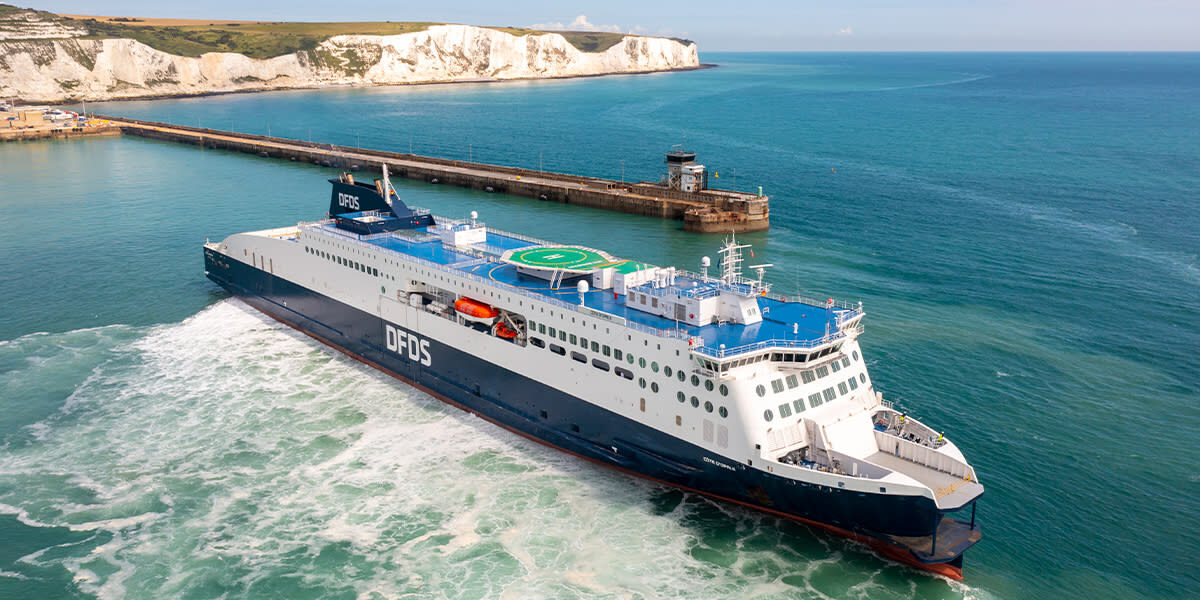
DFDS Seaways provide up to 15 daily sailings

Eurostar from Kings Cross St Pancras


Le Mesnil sur Oger in the Cote des Blancs


