


- Frequently Searched
- Billecart-Salmon
- Bollinger
- Charles Heidsieck
- Dom Perignon
- Laurent-Perrier
- Louis Roederer
- Moet & Chandon
- Pol Roger
- Ruinart
- Taittinger
- All - see brand overviews
- Andre Jacquart
- Armand De Brignac
- Ayala
- Barons de Rothschild
- Bereche et Fils
- Billecart-Salmon
- Bollinger
- Cedric Bouchard
- Champagne Le Mesnil
- Champagne Marguet
- Champagne Rare
- Champagne Suenen
- Champagne Telmont
- Charles Heidsieck
- Delamotte
- Deutz
- Devaux
- Dhondt-Grellet
- Dom Perignon
- Dom Ruinart
- Domaine Alexandre Bonnet Les Riceys
- Domaine La Borderie
- Drappier
- Egly-Ouriet
- Eric Rodez
- Fleur De Miraval
- Girard-Bonnet
- Gosset
- Henri Giraud
- Henriot
- Jacques Lassaigne
- Jacques Selosse
- Jacquesson
- Jerome Prevost
- Krug
- Lanson
- Laurent-Perrier
- Leclerc Briant
- Louis Roederer
- Miniere
- Moet & Chandon
- Nicolas Maillart
- Palmer & Co
- Pascal Agrapart
- Penet-Chardonnet
- Perrier-Jouet
- Philipponnat
- Pierre Gimonnet et Fils
- Pierre Peters
- Piper-Heidsieck
- Pol Roger
- Pommery
- Roger Coulon
- Ruinart
- Salon
- Taittinger
- Ulysse Collin
- Vazart-Coquart
- Veuve Clicquot
- Vilmart & Cie
- Yann Alexandre
Checkout Allows Multi-Address
& Multi Person Drops
Same Day In/Near London
From £9.00
Free 2 Day Delivery
On £250+ or 6 bottles (UK Mainland)
Wrapping, Cards
& Messages
Worldwide Shipping
From £30.00
In Bond Sales
Store with us or Transfer
Average Review Score: 4.9

Average Review Score: 4.9

Greywacke Marlborough Pinot Noir 2023


Bottles Available:
3 × 75cl - 200+ from 14th Oct
Greywacke was founded in 2009 by Kevin Judd, the founding chief winemaker at Cloudy Bay, where he spent 25 years shaping the wine that brought international attention to Marlborough Sauvignon Blanc. Greywacke represents Judd’s personal vision for the region, focusing on site expression, texture, and restraint rather than the overtly tropical style of his former role. Today, the vineyards are sustainably managed, with a growing proportion farmed organically, and wild (indigenous) yeast fermentations are widely used to add savoury complexity and build structure and mouthfeel.
The name Greywacke comes from the rounded greywacke river stones found in the soils of Judd’s first Marlborough vineyard in Rapaura, a sedimentary rock common throughout the region. Greywacke now works with carefully selected vineyard parcels across Marlborough, producing wines of clarity and balance. Alongside his winemaking, Judd is also one of New Zealand’s most respected wine photographers and the author of The Landscape of New Zealand Wine, reflecting his long-standing connection to Marlborough and its vineyards.
All fruit was grown in Marlborough's Southern Valleys and principally sourced from the Yarrum Vineyard situated on the Brancott / Ben Morven ridge. Typical of this subregion, the wind-blown loess soils are comprised of clay-loams with varying degrees of gravel content. The vineyards are all hillside plantings trained to two-cane VSP (vertical shoot positioning) with a vine density of 3,800 plants per hectare.
The grapes were hand-harvested and chilled overnight prior to hand-sorting. Most of the fruit was then destemmed into open-top fermenters, the majority of which also had a percentage of whole-bunch inclusion. The fruit was left to soak on skins prior to the onset of indigenous yeast fermentation, then plunged daily. After fermentation, the wine was pressed, racked and filled into French oak barriques (30% new). Individual clones were barrel-aged separately for 11 months, before blending in January 2024. The wine was bottled in June 2024.
Weather: A relatively dry winter was followed by unsettled spring conditions, including isolated frosts, which had the team monitoring temperatures and directing frost-fighting efforts. Minimal damage was sustained, but the intermittent cold nights continued well into spring, disrupting flowering and causing low berry numbers in some varieties. As summer progressed, El Niño settled into its signature warm, dry conditions, and Marlborough recorded a record high of 34.9 C in early February with very few rain episodes, to the point A drought was declared in mid-March. The harvest for Pinot Noir commenced on the last day of February. Despite the weather challenges, this was a superb, near-perfect harvest of pristine fruit with a generous depth of flavour across all varieties. Growing degree days tallied 1348, slightly warmer than the long-term average.
Technical Information:
Grape: 100% Pinot Noir
Region: New Zealand
Sub Region: Marlborough
Vineyard: Mainly 'Yarrum Vineyard'
Bottled: June 2024
TA: 5.6 g/l
pH:3.65
Alcohol: 14%
Drink: Now to 2035+
Tasting Note: Deeply coloured and exhibiting sweet and savoury aromatics displaying aromas of pumpernickel, bramble berries and the soft scent of lilac. The palate is bright and complex with notes of tamarillo, wild cherry and grilled nectarine flavours, underpinned by fine tannins and a long, driven finish.
Greywacke (pronounced Greywacky) is the Marlborough label of the Judd family and the name of New Zealand’s most abundant bedrock. These understated greywacke river stones are found throughout Marlborough’s rivers and alluvial vineyard soils. Established in 2009 by Kevin Judd, Greywacke is truly a family affair and while the company now exports its wines all over the world, the ethos is very much ‘keep it simple and hands-on’ with a small, dedicated team running the company from Greywacke HQ in the heart of Marlborough’s Omaka Valley. The fruit is sourced from mature vineyards in prime viticultural sites to optimise the potential afforded by Marlborough’s sunny South Pacific climate.
All vineyards are sustainably managed with substantial and increasing proportions coming from organically farmed sites. Crop levels are restricted to enhance concentration of flavour and a long, cool growing season produces fruit with incredible varietal intensity and bright, natural acidity. Meticulous canopy management regimes are employed to provide sufficient fruit exposure to deliver ripeness of flavour, textural richness and optimum acid balance. Greywacke is accredited with AMW status (Appellation Marlborough Wine), ensuring provenance, authenticity and integrity.
Each variety is grown and vinified using techniques aimed at achieving very specific wine styles, with a common objective of delivering concentration of flavour and a harmonious balance of texture and acidity. Minimal- intervention winemaking is adopted to create wines with personality and individuality, aiming for subtle, ripe, delicious-drinking styles. Wild (indigenous) yeast fermentations are used extensively to incorporate savouriness to the flavour profile and build on the structure and intensity of mouthfeel.
The Greywacke range is primarily based on two varieties, sauvignon blanc and pinot noir; the sauvignon being produced in two distinctly different styles. Limited releases of chardonnay, riesling and pinot gris complement the line-up. Kevin’s signature vineyard photographs provide the distinctive identity of the Greywacke labels.
Winemaker: Kevin Judd
Winery Location: Marlborough | New Zealand
Wine Region: Marlborough
Annual Production (cases): 30,000
Winemaker History at Greywacke:
Kevin Judd - 2009 to current
One of Marlborough’s pioneer winemakers whose career is intrinsically linked with the global profile of New Zealand wine. Kevin was born in England and grew up in Australia, where he studied winemaking at Roseworthy College and first made wine at Reynella in South Australia.
He moved to New Zealand in 1983 and joined Selaks Wines. Subsequently, he became the founding winemaker at Cloudy Bay, a pivotal role during which he directed the company’s first 25 vintages. In 2009, he established Greywacke, his own family wine company, named after New Zealand’s prolific bedrock.
Alongside winemaking, Kevin has developed a parallel career in photography. For over two decades, his evocative images have appeared in countless publications worldwide. His first book was the The Colour of Wine, a photographic essay on the vineyards of Marlborough. His second book, The Landscape of New Zealand Wine, was published in 2009 to considerable acclaim.
Kevin and Kimberley live in the Omaka Valley overlooking Marlborough’s picturesque vineyards, the inspiration for both his passions.
95/100
“Fabulous bouquet with complexity and depth, purity of fruit and a sense of site, winemaking style and intrigue. Aromas and flavours of spiced blackcurrant and dark cherry, hay and dried herb, stone and barrel smoke and violet. Dry, a firm texture with polished tannins and medium+ acid line. As the wine opens out in glass the core flavours and texture show more intensity and complexity, a wine that will continue to age and develop.’”
16.5/20
“Mid to light garnet. Sweet-fruited and lightly toasty on first impression – fragrant red fruits slightly hidden by the oak. Tannins are finely textured and in proportion to the juicy fresh fruit. Still primary in its fruit/oak balance but with the harmony to age well. Needs a little longer to integrate fully. Relatively light-bodied. I'd drink this slightly cool but not chilled. ”
93/100
“Complex, with myriad small berries, dried herb, woodsmoke, cinnamon and some darker notes of dried currants. The oak and tannins are presently dusty and build towards grippiness on the back-palate, needing time to absorb fully into the wine. Give it another year in bottle to meld: there is elegance underneath the youthful shell and some interestingly perfumed fruit waiting to unfold”
91/100
“Juicy and well made, with aromas of red berries, strawberries, caramel popcorn and sweet spices. Medium- bodied with velvety tannins. Fruit-driven and supple, with a similar finish.”
90/100
“The savoury 2023 Pinot Noir balances ripeness and tension, juxtaposing sunny, bright Marlborough fruit against nervy acidity. Well-handled tannins coat the mouth in a gentle, sinewy manner”
See All Reviews
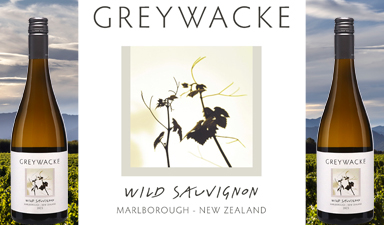
Single Price £38.00 Mix 6 Price £34.00 each Mix 12 Price £32.00 each |
100% Sauvignon Blanc from Marlborough, New Zealand


